
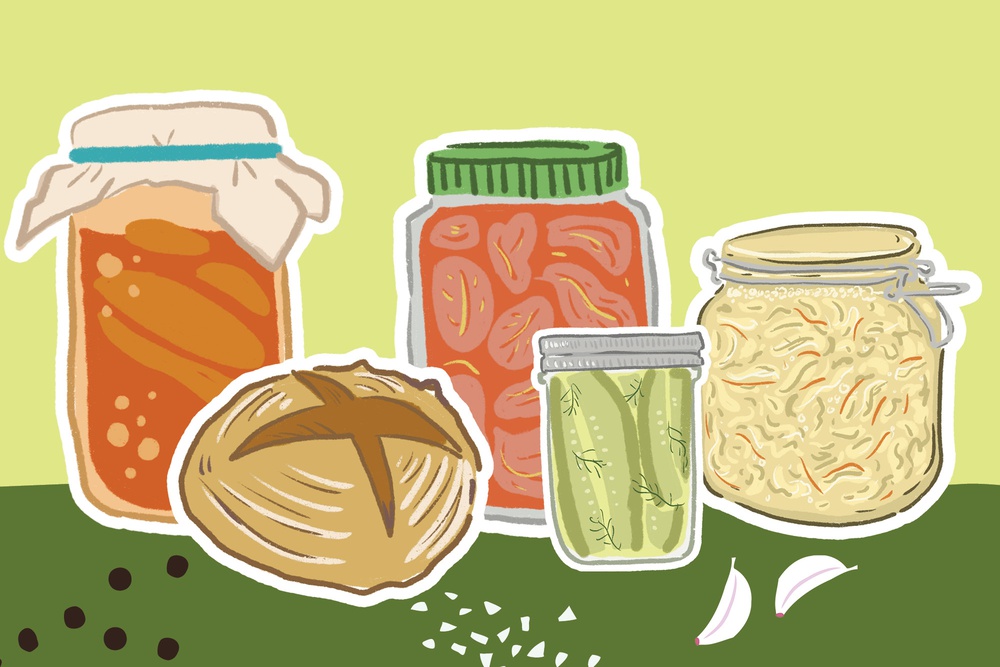
Raw, homemade ferments are teeming with these live bacteria, and research suggests they’re good for more than the taste buds. In a 2021 Stanford study published in the journal Cell, healthy adults who ate more yogurt, kefir, kimchi, fermented vegetables and kombucha for 10 weeks showed greater diversity in their gut microbes and fewer signs of inflammation. And it’s one of the easiest kitchen projects you can do. If you can chop a cabbage and remember to check on a jar, you can ferment.
Start with sauerkraut. Shred a small head of green cabbage (about 2 pounds), toss it with 2 tablespoons of Diamond Crystal kosher salt (or 1 tablespoon of Morton) and massage it for five to 10 minutes until it releases its own liquid. Pack it tightly into a wide-mouth quart jar until the brine rises above the cabbage. Weigh it down and cover loosely, then start tasting after three days. When it’s tangy enough (usually within one to three weeks), cap it and refrigerate, where it’ll keep for months.
Kimchi, sauerkraut’s spicier Korean cousin, works the same way. Napa cabbage is salted, then rubbed with a paste of gochugaru (Korean red pepper flakes), garlic, ginger, scallions and often fish sauce before it’s packed into a jar. It’s ready in a few days but keeps getting funkier in the fridge. You can find gochugaru and napa cabbage at H Mart on Decatur Boulevard.
Once you’ve mastered kraut and kimchi, go wild with carrot sticks, green beans, radishes, baby cucumbers or cauliflower florets. Cover them with a brine of 1 tablespoon of Diamond Crystal salt dissolved in 2 cups of water. Toss in garlic, dill or chili flakes and you’ve got pickles that’ll put store-bought options to shame.
Missed the sourdough pandemic craze? Now’s the time. Stir together equal weights of flour and water in a jar, cover loosely and let the wild yeasts and bacteria already living in the flour take over. Discard half and feed it fresh flour and water daily. In a week or two, it should be bubbly, smell pleasantly sour and double within a few hours of feeding. Now your starter is ready for breadmaking.
Ditch the pricey store-bought kombucha and make your own. You’ll need a SCOBY, a symbiotic culture of bacteria and yeast that looks like a rubbery pancake (available on Amazon), plus a cup or two of already-brewed kombucha as starter liquid. Add them to a jar of cooled, sweetened black or green tea, cover with a cloth and wait one to two weeks. Bottle it with a splash of fruit juice for a second round of fizz.
A word about fermenting in the desert: Heat speeds things up. Vegetable ferments are happiest between 60 and 75 degrees, so a Las Vegas kitchen in July can turn crisp cabbage to mush fast. Ferment in the coolest spot in the house and taste often. Kombucha, on the other hand, likes it warmer, around 75 to 85 degrees. Warm kitchens also invite kahm yeast, a flat, harmless white film that can form on vegetable ferments. Just skim it off and carry on. Fuzzy spots of blue, green, black or pink mold are another story: Toss the batch and start fresh.
Shop Online
• Cultures for Health stocks starter cultures for sourdough, yogurt, kefir and more, plus free recipes and how-to videos. culturesforhealth.com.
• Sourdough fans should browse Breadtopia for dried starter and baking tools. breadtopia.com.
• Kombucha Kamp ships organic SCOBYs and brew kits. kombuchakamp.com.
• For vegetables, Masontops kits turn ordinary mason jars into fermenters. masontops.com.
• Bookmark this. When you’re ready to go deeper, pick up Wild Fermentation by Sandor Ellix Katz, the book that launched a thousand crocks. It covers everything from kimchi and kvass to miso and mead. You’ll turn your kitchen into a laboratory in no time. wildfermentation.com.
Your Starter Kit
Wide-mouth mason jars Quart-size glass jars are the workhorses of home fermentation. The wide opening makes it easy to pack in vegetables and fish them out later, and glass won’t absorb odors or react with acidic brine. Buy a few; once you catch the bug, you’ll want more than one batch going.
Fermentation weights The golden rule: Everything stays under the brine. Glass weights sized for wide-mouth jars keep vegetables submerged and away from air, where mold likes to set up shop. In a pinch, a small zip-top bag filled with brine (not plain water, in case it leaks) does the trick.
Airlock lids These inexpensive plastic tops let carbon dioxide escape while keeping air and fruit flies out. They screw right onto standard wide-mouth jars and are a worthy upgrade for your subsequent batches.
The right salt Not all salt is created equal. Iodine and anti-caking agents found in regular table salt can slow down fermentation and cloud your brine. Stick with pure kosher salt, pickling salt or unrefined sea salt. Check the label: The only ingredient should be salt.
A kitchen scale Fermentation is forgiving, but salt ratios matter. Too little and spoilage microbes move in; too much and the good bacteria can’t do their job. A basic digital scale takes the guesswork out of hitting that two percent sweet spot.
Click HERE to subscribe for free to the Weekly Fix, the digital edition of Las Vegas Weekly! Stay up to date with the latest on Las Vegas concerts, shows, restaurants, bars and more, sent directly to your inbox!
Publication : Las Vegas Sun
Author : Genevie Durano
"We built AmplePoints to give campaigns and agencies a better way to connect with voters—one that's engaging, rewarding, measurable, and compliant," said Tony Singh, CEO and Founder of AmplePoints. "Our Agency Partner Platform helps campaigns maximize every outreach dollar while giving customers a reason to participate."