
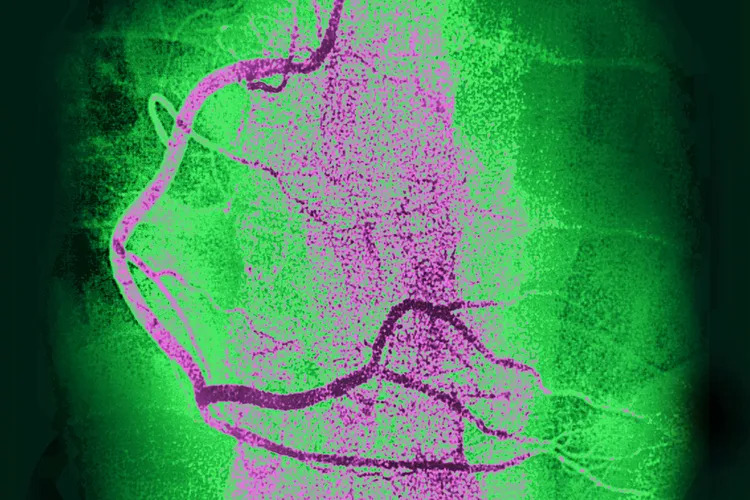
People are increasingly looking to coronary artery calcium scans as a quick and painless way to learn more about their heart health risk—important information, considering heart disease is the leading cause of death in the United States. But as counterintuitive as it may seem, a recent study suggests that these scans aren’t worthwhile for everyone.
The new research found that people at borderline or intermediate risk of heart disease stand to benefit the most from CAC scans, compared with those at either high or low risk.1
Of course, every person is different, and it’s always worth consulting your primary care physician or cardiologist to determine which diagnostic tests are right for you. In the meantime, here’s what you need to know.
What Are CAC Scans?
CAC scans are non-contrast CT scans of the heart that doctors use to look for evidence of calcified plaque in the coronary arteries.2 The scans take only a few minutes and don’t require fasting or medications. That said, as CT scans, they do expose patients to a small amount of radiation.3
Doctors calculate calcium scores based on the volume and density of calcium within coronary arteries. Generally, the higher the score, the greater the risk of a heart attack.
According to Michael Wilkinson, MD, a cardiologist with UC San Diego Health, the scans can be a powerful tool for helping patients understand their heart health and potentially move forward with appropriate interventions. “There’s a big difference between seeing a number from a lipid panel and seeing calcified plaque in your arteries, and sometimes, that really goes a long way,” he said.
Why Did Researchers Want to Examine CAC Scans?
Patient interest in CAC scans has sharply increased over the years, in part because an increasing number of health centers now offer them without a prescription or physician order.4 But easier access has also raised concern among cardiologists that some people might be getting them unnecessarily. The tests might be simple, but they still involve radiation.
That unease prompted Nilay S. Shah, MD, MPH, an assistant professor of cardiology at Northwestern University Feinberg School of Medicine, to conduct the new study.
“The idea and the motivation for the research was to better understand who best would benefit from getting the information from a calcium scan, and how should we most appropriately be using them,” Shah said.
Shah and his team specifically wanted to know whether adding calcium scoring to the American Heart Association-recommended PREVENT equation to calculate 10-year risk for atherosclerotic cardiovascular disease (ASCVD) would improve the model’s performance. PREVENT scores consider factors such as blood pressure, age, and cholesterol to estimate a person’s 10- and 30-year risk of developing heart disease, including atherosclerotic cardiovascular disease and heart failure.5
For high-risk patients, Shah said the next step is often clear: taking a statin to lower cholesterol. But for people at borderline risk, deciding whether to take action can be less straightforward based on the score alone.
The new study “is an example of people trying to get into the nuances of how these risk scores will perform if you add things like imaging,” said Eugene Yang, MD, MS, FACC, a cardiologist and professor of cardiology and medicine at the University of Washington School of Medicine, who was not involved with the study.
Publication : Health
Author : Laura Bradley
"We built AmplePoints to give campaigns and agencies a better way to connect with voters—one that's engaging, rewarding, measurable, and compliant," said Tony Singh, CEO and Founder of AmplePoints. "Our Agency Partner Platform helps campaigns maximize every outreach dollar while giving customers a reason to participate."